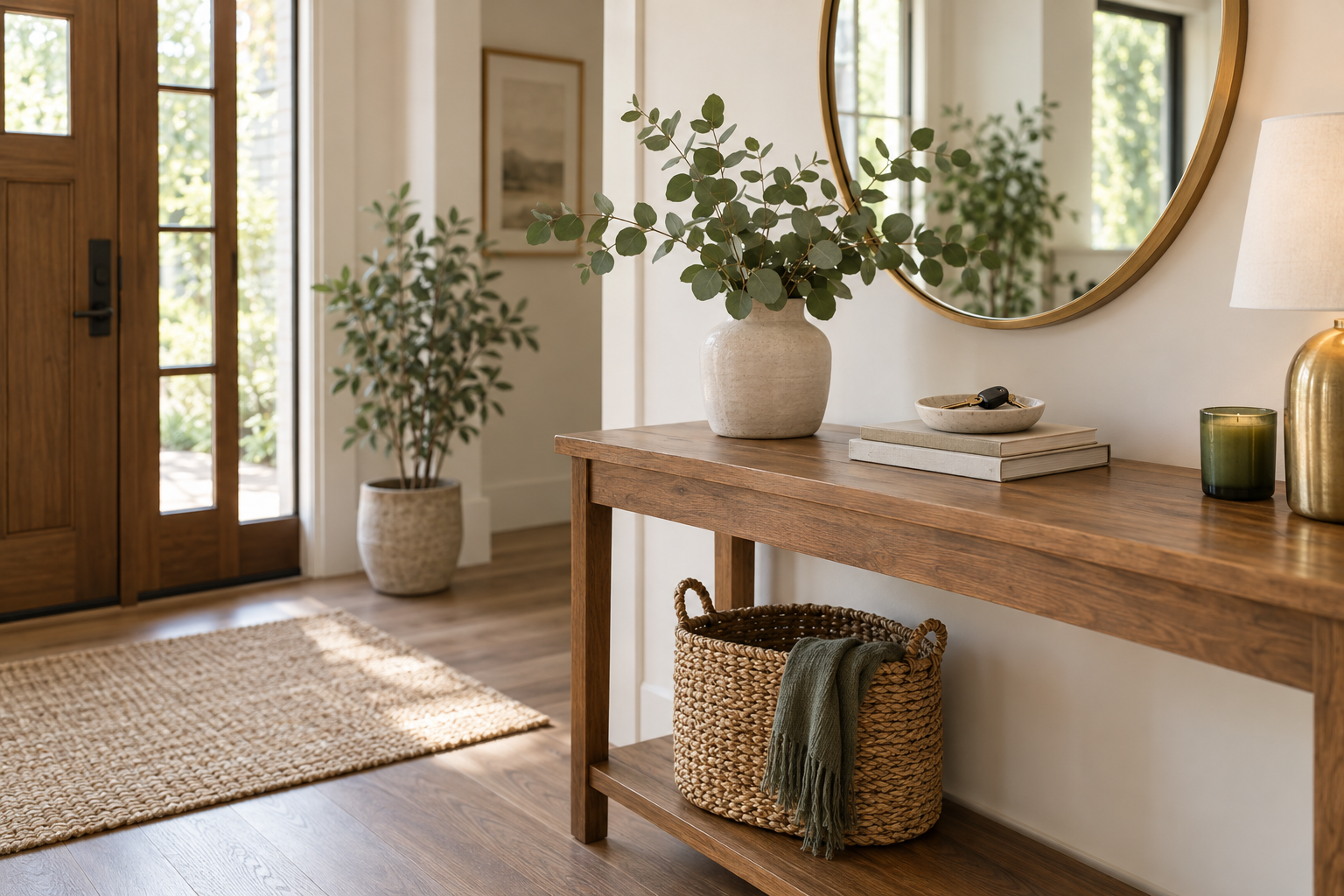
You open the front door with your hands full. Mail covers the console. The overhead light feels harsh. Before you set down your bag, the house starts asking for things. If you are wondering how to create a peaceful home, begin here: fewer demands, not more decorating.
You may look wonderfully capable to everyone else. Still, you deserve somewhere you can stop holding everything together.
Within my 7 Pillars of Peace, Home is your headquarters for the life you are building. It should support you, not become another measure of your success.
How to Create a Peaceful Home With Less Effort
During my burnout recovery, I began looking differently at the spaces around me. A beautiful room meant little if maintaining it drained what energy remained.
My nursing background taught me to notice practical details. Can you reach what you need? Is the light comfortable? Does the space allow rest?
Those questions matter at home, too.
Peace is structural. It grows from where you put your keys, what stays on your counters, and who shares the work.
Before changing anything, ask yourself:
- Where do I feel most overwhelmed at home?
- What do I repeatedly search for?
- Where could I sit without seeing unfinished work?
Choose 1 answer to address this week. You do not need a whole-house plan.
Clear the View Before Clearing the House
Visual noise comes from too many things competing for attention. Receipts, cords, packaging, and unfinished projects can make a room feel busy.
You do not need bare shelves. You need somewhere your eyes can settle.
Start with the surface you see when entering your bedroom or living room. Set a timer for 10 minutes. Remove rubbish, return misplaced items, and relocate anything that belongs elsewhere.
Leave what serves the space. A lamp, a book, and a ceramic bowl may be enough.
Do not empty an entire cupboard when you only have 10 minutes. Work within a boundary you can finish.
If an object carries emotional weight, leave that decision for another day. Begin with expired coupons, empty boxes, and duplicates you never use.
A clear bedside table can support tonight. A dismantled closet may create another obligation.
Give Everyday Things an Easy Place to Land
Organization works when putting something away feels almost as easy as dropping it.
Watch where your belongings naturally collect. Place a key bowl near the door you actually use. Put a laundry basket where clothes tend to fall.
Let your habits guide the system before asking yourself to build new habits.
- Keep daily skincare together on a washable tray.
- Create 1 place for incoming mail, with recycling nearby.
- Store chargers beside the seat where you use them.
- Keep bags on accessible hooks rather than crowded shelves.
Use containers you already own before buying matching baskets. Measure the space and understand the need first.
Shared homes also need shared responsibility. Agree on who handles recurring tasks. Avoid becoming the household supervisor simply because you noticed the problem first.
A system that depends entirely on your reminders is not giving you much relief.
Use Lighting to Mark the End of the Day
A room can feel entirely different when you switch off its brightest overhead light.
Try a shaded lamp near your evening chair. Add another beside the bed. Warm-toned bulbs often feel gentler in living spaces than cool, bright ones.
Keep enough light for reading, cooking, stairs, and safe movement. Peace should never require squinting or navigating a dark hallway.
During daylight hours, open curtains where privacy allows. Move a favorite chair closer to natural light if the layout permits.
Then create an evening cue. After dinner, turn on the lamps and lower unnecessary lighting.
You are not staging a photograph. You are making the room more comfortable for the person who lives there.
Let Scent Be Subtle, or Skip It
A peaceful home does not need a signature fragrance.
Start with the source of unwanted odors. Empty bins, wash kitchen cloths, and clean pet areas. Open windows when weather, outdoor air quality, and safety allow.
Freshness often comes from ordinary care, not another scented purchase.
If you enjoy fragrance, choose 1 gentle scent rather than several competing ones. Keep it light, especially in shared rooms.
Consider anyone with fragrance sensitivities, along with children and pets. Follow product safety guidance. Never leave a burning candle unattended.
Unscented is a thoughtful choice. Clean cotton bedding and a freshly washed kitchen can offer all the sensory comfort you need.
Make Room for Quiet Without Adding a Room
You do not need a meditation room or an empty house. A quiet space can be 1 end of the sofa.
Choose somewhere comfortable. Clear the nearest surface. Add a soft throw and a light suited to reading.
Keep work papers and household administration elsewhere when possible. This small area needs a different purpose.
Then consider sound. Turn off the television when nobody is watching. Silence nonessential notifications. If silence feels uncomfortable, try low music without lyrics.
Tell the people you live with what you need: “I am taking 15 quiet minutes. Please interrupt only if something cannot wait.”
The space does not have to look special. Its value comes from using it without sorting laundry at the same time.
Build Routines That End Instead of Expanding
A household routine should make tomorrow easier without consuming tonight.
Try a 7-minute evening reset. Choose a consistent cue, such as finishing dinner or feeding the dog.
- Return loose items from 1 shared surface.
- Set out what you need for the morning.
- Put dishes in the dishwasher or gather them neatly.
- Switch on softer lighting.
Stop when the timer ends. Do not let a small reset turn into cleaning the refrigerator.
When others share your home, divide the tasks clearly. Children can take age-appropriate jobs. Adults can own tasks from start to finish.
On difficult evenings, make the routine smaller. Put away food, clear a safe walking path, and leave the rest.
Rest is a discipline, but it is not a reward for finishing everything. Sometimes the most useful routine is deciding when household work ends.
Choose Comfort Before Buying Beauty
Intentional luxury starts with how something feels and functions.
Before purchasing anything, notice what irritates you daily. Perhaps your reading chair needs better support. Perhaps your bedside lamp makes every page hard to see.
Solve that problem before adding decorative objects.
Shop your own home first. Move the softer blanket into regular use. Bring out the cup you save for guests. Remove the cushion you always push aside.
If you decide to spend, choose 1 useful improvement within your budget. A washable cover or comfortable pillow may serve you better than a styled shelf.
Your home can feel luxurious without quietly creating financial pressure.
Let This Week Be Enough
Choose 1 surface, 1 practical system, and 1 cue for rest. That might mean clearing your nightstand, adding a key bowl, and using lamps after dinner.
Live with those changes for several days. Notice what helps and what feels like extra work. Keep only what supports you.
A peaceful home still holds laundry, complicated conversations, and ordinary mess. It simply gives you more places to recover between them.
For gentle support as you build a softer life, join The Lux Reset newsletter at cherylonlux.com/subscribe.
Tonight, make 1 corner easier to be in. Then let yourself enjoy it.