The kitchen counter holds unopened mail, reading glasses, and yesterday’s coffee cup. You want a quieter home. You do not want another exhausting project. Learning how to declutter when overwhelmed begins with a smaller promise: make 1 part of your home easier to use.
You may manage complex work and care for everyone around you. Still, a crowded drawer can feel impossible after a long day. That does not mean you lack discipline. It means your home needs a plan that respects your energy.
Within my 7 Pillars of Peace, Home is your headquarters for the life you are building. It should support you, not demand every remaining ounce of effort.
How to Declutter When Overwhelmed: Start Smaller Than a Room
Do not begin by promising to finish the house this weekend. Begin by choosing 1 useful surface or drawer.
A whole bedroom contains hundreds of decisions. A bedside table contains far fewer. Give yourself a task you can finish, including putting everything away.
My nursing background taught me to notice what needs attention first. Burnout recovery taught me that everything cannot come first. At home, that means choosing function before appearance.
Ask yourself: Which small space would make tomorrow noticeably easier?
- The counter where you prepare breakfast.
- The chair holding clothes you need for work.
- The entryway where you search for your keys.
Set a timer for 10 minutes. Use 3 bags or containers: rubbish, donations, and items belonging elsewhere. Leave things you use in their proper place.
Stop sorting when the timer sounds. Spend 5 minutes removing rubbish and returning displaced items. You may stop sooner if your energy drops. Finishing a small area matters more than filling the timer.
The Entryway: Make Coming Home Easier
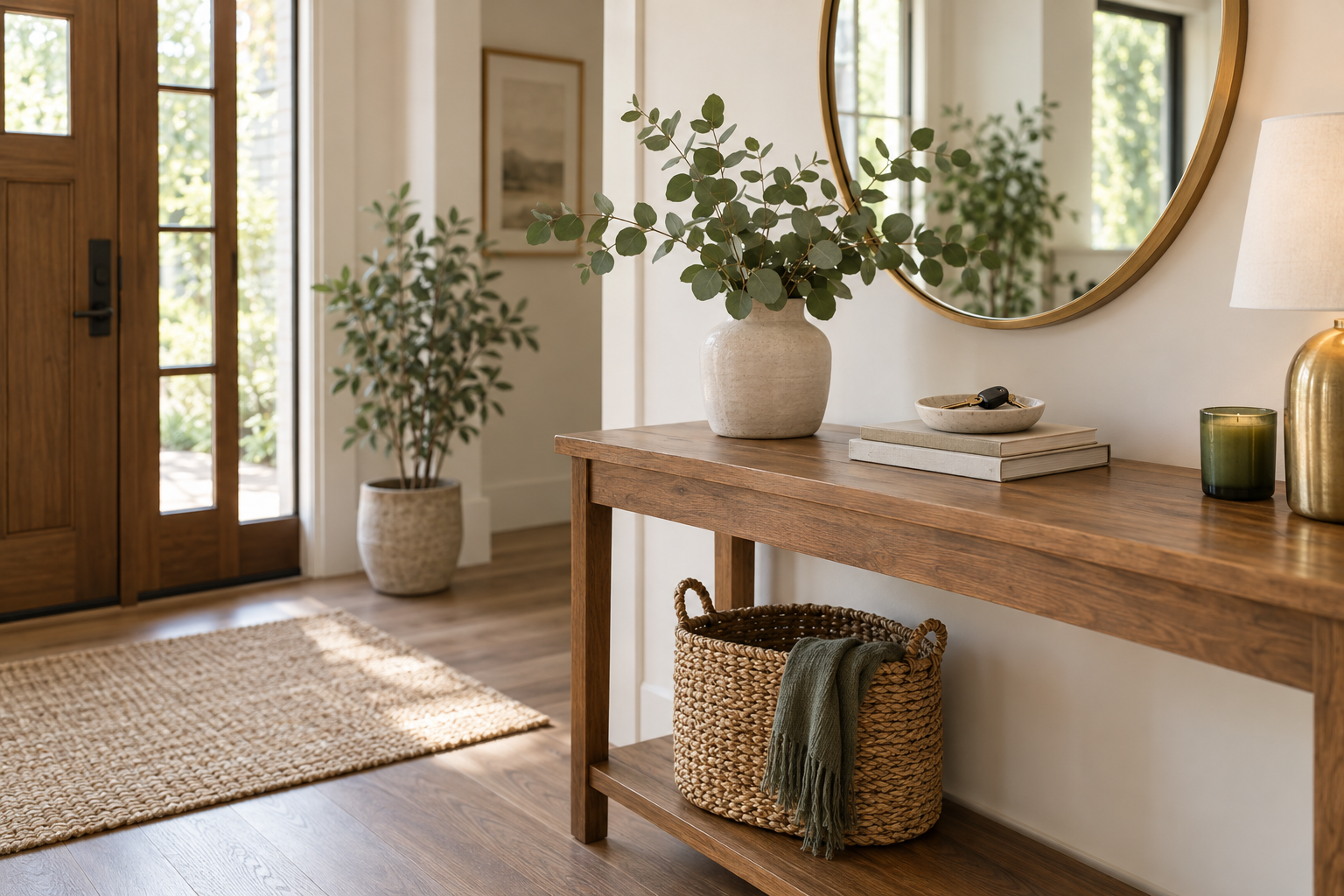
Your entryway does not need a grand console or fresh flowers. It needs somewhere to put down what you carry.
Start with the floor and door swing. Remove shoes, bags, and parcels that block your path. Then choose a home for keys, your everyday bag, and current outerwear.
Use a bowl or tray you already own. Keep only the shoes you regularly wear near the door. Store occasional pairs elsewhere, if space allows.
If other people share your home, invite them to choose their own landing spots. Do not quietly take responsibility for every coat and backpack.
This week: Clear the smallest surface near your entrance. Leave enough room to set down your bag without moving anything.
The Kitchen: Clear Space for Daily Care
A crowded kitchen can turn a simple meal into another negotiation. Begin where you prepare food, not inside every cupboard.
Choose 1 section of counter. Return food to its shelf. Recycle packaging. Move paperwork to a single place outside the food preparation area.
Keep frequently used appliances accessible. Store occasional ones only where they remain easy and safe to retrieve. Clear counters should not require lifting heavy equipment every morning.
Next, choose 1 drawer. Remove broken tools and unnecessary duplicates. Keep what supports the way you actually cook.
You do not need to discard useful belongings for a minimalist photograph. The goal is enough space to slice an apple or prepare tea comfortably.
This week: Clear 1 preparation area and 1 utensil drawer on separate days. Wipe each space before returning what belongs.
The Bedroom: Protect the Place Where You Rest
Your bedroom can become storage for everything you have not decided about. Clothes gather on chairs. Returns wait beside the door. Work follows you upstairs.
Start with your bedside surface. Keep the things that support your evening: a lamp, your current book, perhaps a glass of water. Remove old receipts, empty packaging, and unrelated paperwork.
Then clear a safe path around the bed. You do not need to tackle the wardrobe yet.
A smooth bedside surface and a clear walking path can make the room feel less demanding. This is where the Home and Sleep pillars meet.
Avoid emptying drawers onto your bed late in the evening. Rest should not depend on finishing a sorting project.
This week: Give your bedside table 10 minutes before dinner. Let bedtime remain bedtime.
The Bathroom: Keep Care Within Reach
Bathroom clutter often holds good intentions. There is the serum you disliked and the gift set you never opened.
Choose 1 shelf or drawer. Separate daily essentials from occasional products. Discard empty packaging and products that have expired or changed noticeably.
For medicines, follow local disposal guidance or ask your pharmacist. Do not assume they belong in the rubbish or down the drain.
Keep your daily routine easy to reach. A clean washcloth and the moisturiser you enjoy deserve space. Products you avoid do not need the best shelf.
Luxury can mean finding what you need without rummaging through sticky bottles.
This week: Clear 1 bathroom shelf. Do not buy organisers until you know what you are keeping.
The Wardrobe: Dress the Life You Have Now
A wardrobe can hold former careers, changing bodies, and expensive mistakes. Approach it without turning every hanger into a judgment.
Choose 1 category, such as work trousers or everyday tops. Do not pull out everything.
Ask whether each piece fits comfortably and serves your current life. Notice whether you actually choose it when it is clean.
You can appreciate what something once meant without keeping it in daily rotation. You can also keep sentimental clothing outside your working wardrobe.
For uncertain items, use 1 small review box with a date. Revisit it in 30 days. This gives hesitation a boundary without forcing rushed decisions.
Alterations need a plan, too. Choose a realistic appointment rather than keeping an endless repair pile.
This week: Review 5 items. Return the keepers neatly and put donations somewhere ready to leave.
The Living Room: Make Room to Sit Down
Shared rooms collect the evidence of shared lives. A peaceful living room does not have to hide every book or blanket.
Start with somewhere comfortable to sit. Clear the chair that has become a holding area. Then clear enough table space for a drink.
Gather stray items by owner. Ask each person to return their belongings. Agree on a basket or shelf for things used together.
Keep sentimental decisions separate from ordinary tidying. Photographs and inherited objects deserve time, not a hurried verdict during a tired evening.
Leave room for pleasure. A soft throw, warm lamplight, and a favourite novel belong here.
This week: Restore 1 seat and 1 nearby surface. Sit there afterward, without immediately starting another task.
Build a Week That Includes Stopping
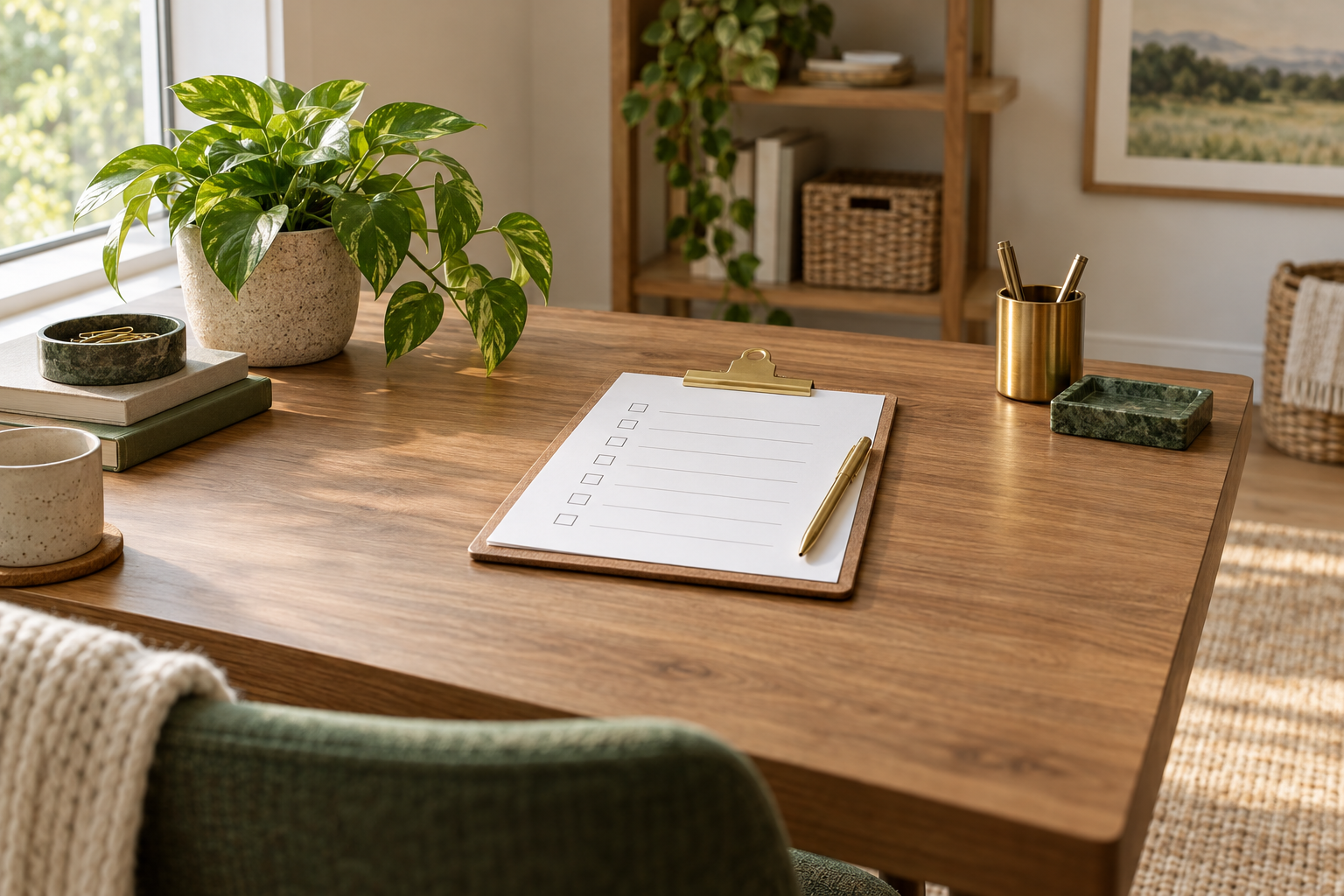
This room-by-room guide is a route, not a deadline. Choose only 2 or 3 small areas for your first week.
- Monday: Clear your entryway landing spot.
- Wednesday: Reset your bedside table.
- Saturday: Review 1 kitchen drawer and take donations out.
Schedule the exit as carefully as the sorting. Check what your donation centre accepts. Arrange a drop-off or collection that fits your week.
If you miss a session, resume with the next small space. Do not double the work as punishment.
Once an area works, give it a brief daily reset. Return the keys. Put away the cup. These small acts maintain peace without consuming your evening.
Let Your Home Support Your Next Chapter
You do not need a different personality to have a calmer home. You need fewer decisions at once and places that serve your actual routines.
Start where relief will reach you fastest. Finish something small. Then let yourself enjoy it.
For more gentle ways to build an intentional life, join The Lux Reset newsletter at cherylonlux.com/subscribe.
Tonight, perhaps the whole house will not be clear. But your bedside table can be ready for a book, a lamp, and rest.